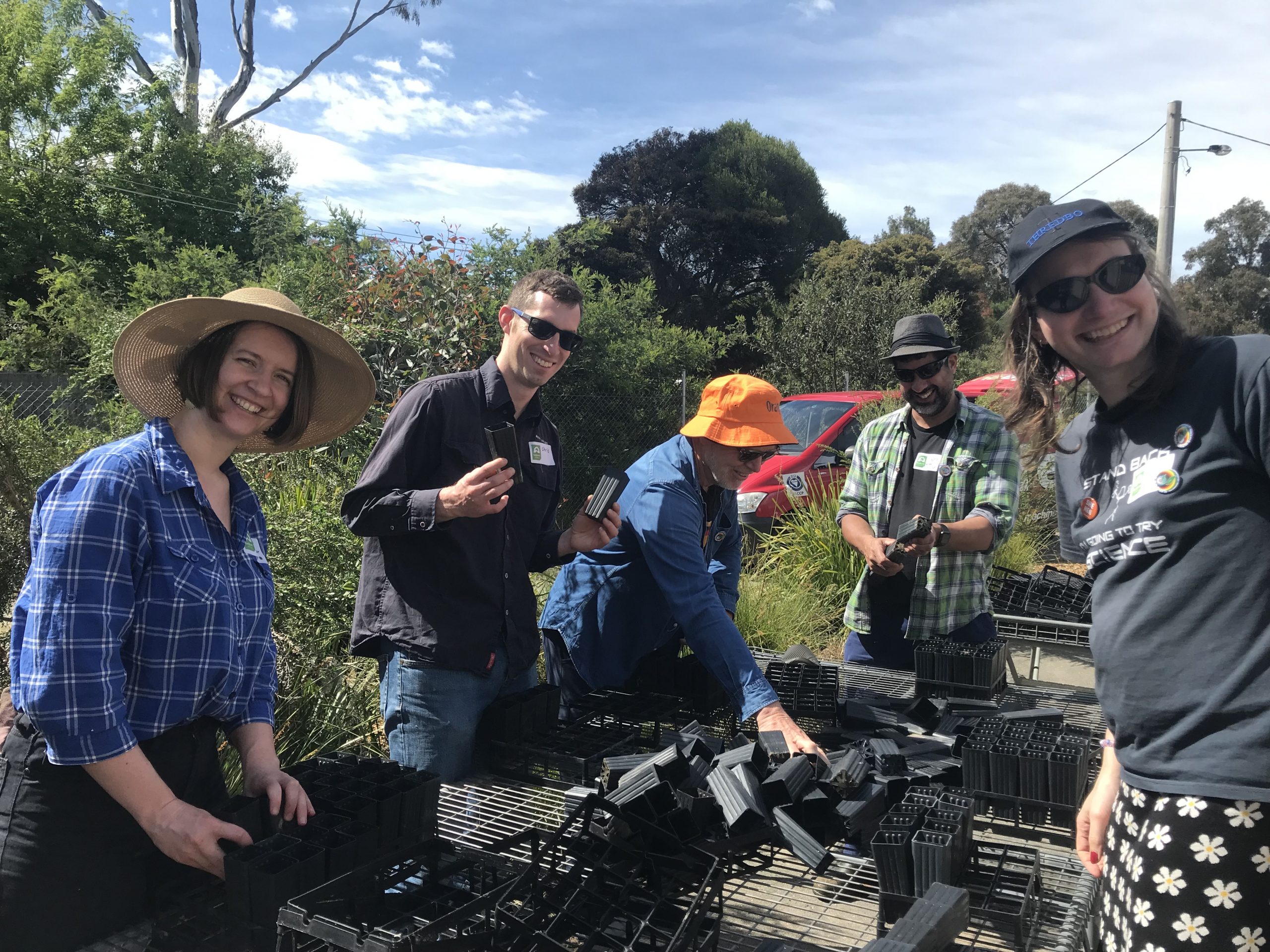
“For Aboriginal people, the connection with the land is difficult to put into words. Getting out onto country is a healing process both physically and mentally… Caring for country is more than natural resource management and participating in Landcare activities. It is a spiritual reconnection and revitalisation which is vital for our wellbeing,”
Wally Bell, Ngunawal Elder
Research shows people who feel connected to nature are far more likely to protect it. A landmark University of Tasmania study found those with high nature connectedness are 82 times more likely to engage in pro-environmental behaviours, making it one of the strongest predictors of climate action, more powerful than knowledge alone.
But this isn’t just about numbers, it’s about values. When we slow down and connect with nature — listening to birds, feeling the sun, noticing the seasons — we awaken gratitude, compassion and care. These values naturally lead to giving back and nurturing what nurtures us.
This flow from connection to care benefits both people and planet. When individuals restore their wellbeing through meaningful experiences in nature, they are more likely to act in ways that restore ecosystems and communities. Personal and planetary health are interlinked. Humans may cause environmental problems, but they must also be part of the solution.
The pathway is clear:
🌿 Personal wellbeing grows from time in nature
🌿 Resilience strengthens through connection and reflection
🌿 Climate action follows as care becomes everyday choices, volunteering and stewardship
Nature connection is not a luxury, it is a foundation for human thriving and environmental stewardship. It must be built into programs and policies, not left to chance. When we invest in nature connection, we unlock one of the most powerful levers for climate action and community resilience.
Nature connection is the quality of our relationship and emotional bond with nature. It’s more than just being outdoors – it’s about mindful, embodied engagement.
Benefits include:
🌿 Improve mood
🌿 Enhance cognitive function
🌿 Restore attention
🌿 Spark creativity
🌿 Boost the immune system
🌿 Reduce stress and tension
🌿 Regulate the nervous system
🌿 Help recover from burnout
When we slow down and truly notice nature, the benefits go beyond exercise or time in green spaces.
Savour + Save:
We can enjoy nature while protecting and restoring it.
Key Components:
🌿 Slowing down
🌿 Activating the senses (full body listening)
🌿 Resisting the urge to classify or compartmentalise, embracing interconnectedness
🌿 Suspending the need to know what it is and instead being curious about how it is
🌿 Noticing the little details
🌿 Appreciating beauty, awe and wonder
Ready to start? Explore our tips and prompts for deepening your nature connection.
The Wellbeing through Nature program is based on international research showing that actively connecting with nature improves mental health, wellbeing and social connectedness. Nature-based activities are linked to lower rates of depression, anxiety and other health issues.
The program also drew on the experience of long-term Landcarers, who report that caring for the environment improves their own health and sense of purpose. Landcare activities strengthen social ties, mental health and recovery.
Funded by the ACT Government through the 2021 Health Promotions Grants program, this two-year pilot aimed to:
• Improve mental health for people with complex challenges
• Strengthen social connectedness for priority populations
• Expand nature-based activities to improve community wellbeing beyond the program
Over two years, Landcare ACT delivered:
• 50 Guided Walks
• 38 Conservation Activities
• 8 Therapeutic Horticulture Activities
• 5 Deepening Nature Connection Sessions
More than 1,000 attendances from over 600 unique participants.
An independent evaluation by the University of Canberra found overwhelmingly positive results:
• 94% felt more connected to the local environment
• 85% felt more connected to others
• 88% reported improved quality of life
• 91% said the program supported mental health
• 94% agreed it improved overall wellbeing
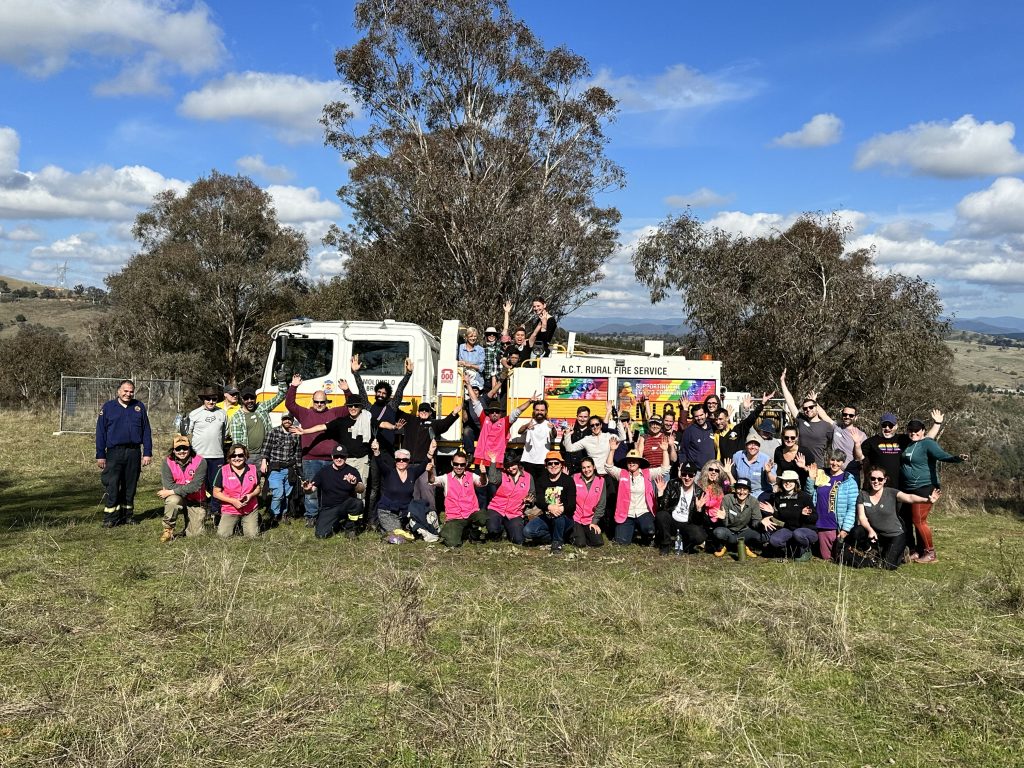
Supported by an ACT Environment Grant in 2024, this environment focussed roving community group empowered LGBTQIA+ folk to connect with and care for nature through active, hands-on conservation.
Program partners:
• Meridian ACT
• Diversity ACT
• Ginninderry Conservation Trust
• ACT NRM
• Greening Australia
Listen to the radio interview with ABC Canbera’s Adrienne Francis speaking with Sally Holliday of Landcare ACT and Lee Caldwell of Meridian about the roving Landcare group.
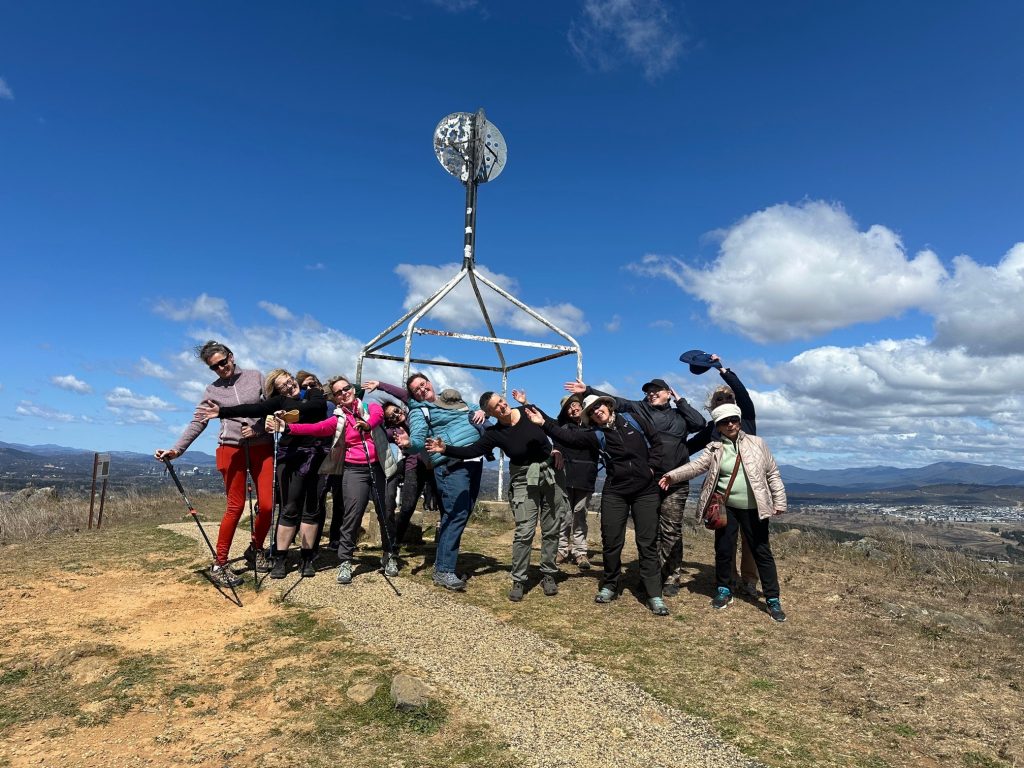
Supported by an ACTEWAGL Community Grant in 2024 the Women in Nature initiative was a collaboration between Landcare ACT and community support services.
Program activities included guided walks, nature-based art, and group gardening sessions designed to foster a deep connection with the natural environment whilst promoting well-being, personal growth, and healing.
By engaging in group activities and collaborating on landcare projects, participants developed a sense of belonging and connection within their community, mitigating feelings of isolation. Contributing to the preservation and enhancement of local natural environments, fostered a sense of environmental stewardship among participants.
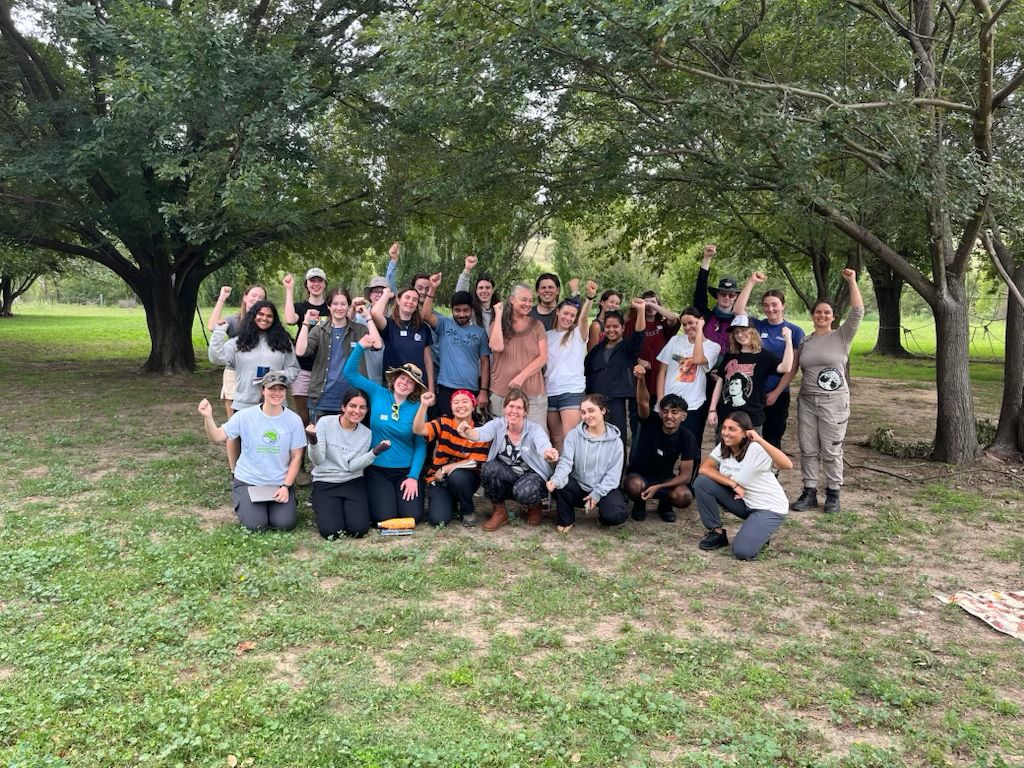
An initiative by Landcare ACT through the 2024/25 ACT Environment Grants Program.
A community group for nature lovers aged 18-30 with an interest in connecting with and caring for nature.
Landcare ACT facilitated a weekend gathering at Outward Bound with a focus on:
• Possible career pathways in the Environment sector
• Volunteering opportunities
• Citizen science programs
• Nature Connection as a protective factor supporting health and wellbeing whilst preventing burnout (sadly prevalent in the environmental advocacy/caring space).
Landcare ACT collaborated with Psychology for a Safe Climate to facilitate a workshop around the impacts of climate change anxiety and eco grief. When faced with large-scale challenges like climate change and species loss, working alongside others toward a shared purpose is a powerful antidote to eco-grief, overwhelm and loneliness, shifting us out of paralysis and into collective action.
The group composed a powerful Collective Poem speaking to their shared experiences.
If you would like to be kept in the loop about future nature connection events and initiatives,
sign up to the Landcare ACT mailing list (no spam we promise, just alerts when new opportunities arise).